
smART #2 - A different model

Is it a Manifesto?
Jim Roche recently asked if taking up photography was a "total mistake." It’s a question that resonates profoundly with anyone looking at the photography art scene today.
Photography is a universal art, that is my strong belief. The inception of this project was as simple as a realization: "I have this amazing, perfect place to display art. This should be the art I love, and I want to share it." And so, I am creating an art gallery.
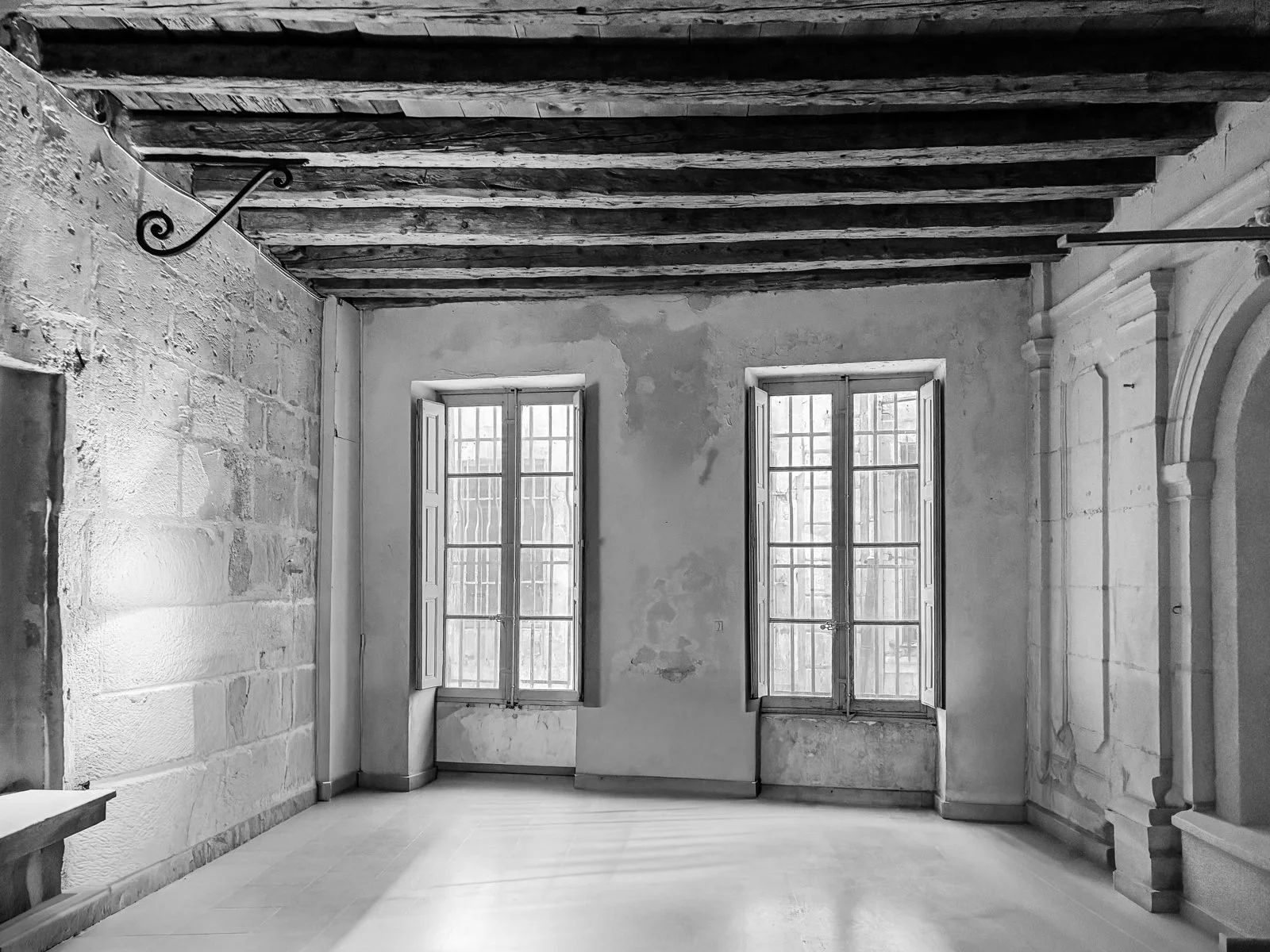
Empty walls (actual picture enhanced by AI)
Once the idea became obvious, I had to dig into the reality. I spent months visiting galleries, talking to photographers, and trying to understand the business models, the challenges, and the full ecosystem. And yes, I see exactly what Jim is explaining.
I have seen both the cold, intimidating atmosphere of traditional galleries and various art collective approaches across different countries and cultures. From personal experience, I’ve had direct glimpses into the rituals of high-end fashion, the luxury world, and wealthy collectors, as well as the corporate model of business sponsors.
The disconnect is profound. I saw the perfect lighting, the elitist messaging, and the astronomical price tags, but I often felt a total absence of human soul. The art was present, but the "link" was broken.
My answer to Jim is simple: The mistake isn't the medium; it's the mold. We are stuck with a model developed centuries ago, designed to cater only to an audience of wealthy and "knowledgeable" buyers. Artists remain heavily dependent on art dealers and sponsors. On the other side of the spectrum, the digital economy has birthed a "fast fashion" model: standardized, cheap prints selected by color, size, and theme.
Between these two extremes, a key question remains: What about the artist and the art itself? I am modestly trying to answer this question with the model I am building for Galerie Bokeh. I don't claim to have all the responses or the power to solve a disrupted system on my own. I simply hope to add my small pebble to the pile.
1. An Economic Answer: The 90/10 Solidarity Model
The Problem: The traditional gallery model is a financial dead-end where the artist carries the risk while the gallery takes the lion's share. Furthermore, after talking to many gallerists, it appears that even that "lion's share" is becoming meager and unsustainable for the venues themselves.
The Response: Galerie Bokeh is a non-profit association. We are replacing the old 50/50 commission with a model based on production solidarity. The structure operates on a transparent, three-step process:
• No "Pay-to-Play": The gallery advances the real costs of the exhibition (printing as needed, framing, scenography, and publishing). The artist is no longer forced to carry heavy financial burden alone and will never be asked for upfront money to show their work.
• Amortization First: The very first sales are used to reimburse these actual production costs. We refuse to cut corners on quality, but we avoid lavish expenses. Our model is designed to offer the best printing and editing conditions at reasonable, justifiable costs. We will produce in-house if feasible.
• 90% for the Creator: Once the costs are covered, 90% of the sales go directly to the artist. The remaining 10% stays with the association to keep the project alive and invest in future exhibitions.
It is a deliberate choice to align our structure with our values: putting the creator back at the center of the economic model.
2. The Core Medium: The Exhibition and the Print
The Problem: In a digital-first world, the "physical truth" of photography is lost. Images are consumed on glowing screen. Fast, flat, and disposable, or seen as standardized "decor" products. Personally, I have never felt an emotion that stops me in my tracks from a phone-sized picture covered in tiny floating hearts. But many times, while visiting an exhibition or flipping through an art book, I have been forced to stop. To deep dive into the light, the grain, the sensation. To resonate with the humanity, the pain, the beauty, the surprise, the moment, the silence, the joy, the color, and the story.
The Response: At Galerie Bokeh, the exhibition is the heartbeat, and the "Lab Print" (whether analog or digital) remains the King.
• The Lab as the Origin: We believe that the true essence of photography is what comes out of the lab, conveying the full intent of the photographer. It is a physical object with texture, depth, and a soul. Our primary mission is to showcase these works in an environment that respects their integrity and provides the best conditions for visitors to fully experience them.
• The Exhibition as an Experience: An exhibition is not just photos on a wall; it’s a physical encounter between a creator’s vision and a viewer’s gaze. Everything in the gallery (the lighting, the scenography, the old stones) is designed to magnify the artist's work.
The photographer and their creation are at the absolute center of every decision we make.
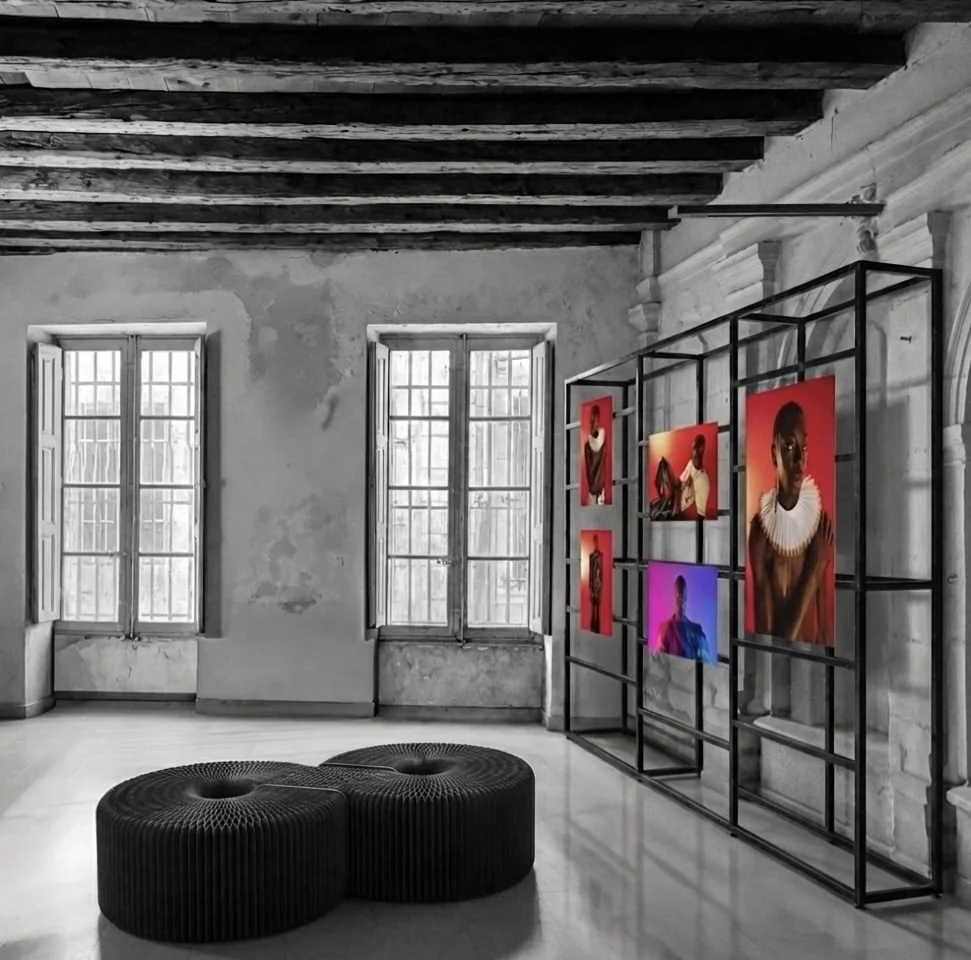
The gallery as I see it (actual picture enhanced by AI)
3. The Support Ecosystem: Completing the Artist’s Vision
The Problem: Too often, the dialogue between the artist and the public ends at the gallery door. The work is either purchased (and disappears into a private collection) or simply ignored.
The Response: We believe the artist's proposal should be completed by a full ecosystem of support. These are not distractions; they are bridges. Beyond providing an affordable alternative for those who cannot yet purchase a print, they prolong the visitor’s experience and offer another lens through which to understand the artist’s perspective.
• Books, Booklets, and Zines: They are the "takeaway" soul of the exhibition. They don’t replace the print; they document the process and make the artist’s vision portable. I am particularly drawn to the whimsical nature of the zine format. They provide something tactile and casual. Don't you hate seeing art books on display sealed under plastic? I want people to touch the paper. I have many ideas involving photo zines to reach new audiences, break the generational gap, and promote a wider range of photographers.
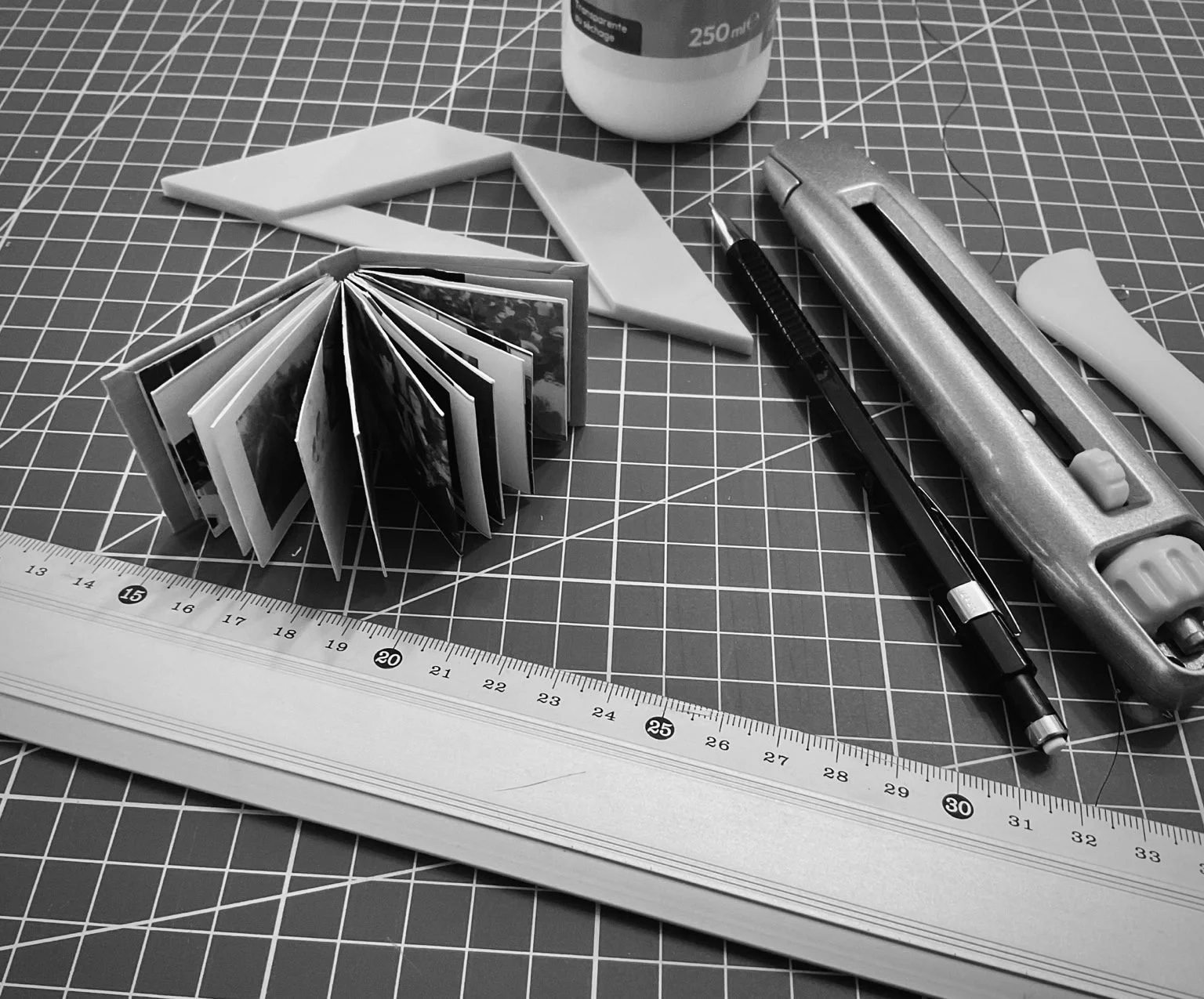
Crafting zine prototypes
• The Cultural Café: We are replacing the "silent gallery" model with a warm, living one. Through talks, physical and virtual meetings with artists, and intimate gatherings in the garden patio, we give the photographer a voice. Photo books and zines will be on display to accompany a drink after a visit, or to entice café patrons to step inside the exhibition.
• A Multi-channel Presence: From our physical walls in Provence to our digital community on Substack, every tool we use has one single purpose: to serve the work and ensure the photographer’s message is heard across borders.
• And more to come: As the renovation of the mansion reaches the upper floors, artistic residencies will become a reality. Calls for projects, private events, and small festival, we look forward to exploring creative ways to continue promoting photography as high art.
4. The Venue: Old Stones
I cannot explain the gallery’s approach without mentioning the place. I know that when I throw out the words "18th-century mansion," it immediately sounds elitist. However, it happens to be my family home in a small town, and honestly, if you saw it today, it is far from intimidating!
My goal is simply to bring back that 70’s spirit (1770s, of course) so those stone walls and high ceilings can be warmed up by great photography along with the sun of Provence.
Galerie Bokeh is not a "White Cube." It is a place of hospitality with a soul, designed to host soulful creations. We are replacing the "Price Tag" culture with a "Come and see for yourself" culture, where the story of the image and the human process of the artist matter more than the prestige of the walls.
Conclusion: Not a Mistake, but a Mission
Taking up photography wasn't a mistake, Jim. It was a calling that simply needed a home where the artist is treated as a partner, not a product, and where the viewer is invited to feel, not just to buy.
The emotion of a lab print under the Provence light is timeless. I’m just trying to add my small pebble to the wall, one zine and one exhibition at a time.

