
FIAT LUX

I am obsessed with light.
Hardly surprising when photography is your guiding light. Etymologically, technically, and artistically, light is the very core of the medium.
When the goal is to present photography in its best possible environment, getting the lighting right isn't just important; it's everything.
That’s why I knew I had found the right lighting contractor before I even hired her. Her very first question was: "What kind of photography do you intend to show? Black and white? Color? Any specific medium in mind?"
Depending on the work, every variable in the lighting must align: color temperature, intensity, angle. The exact same exhibition can feel entirely transformed depending on how it's lit. Since Galerie Bokeh will showcase a variety of styles over time, our technical setup needs to be exceptionally versatile.
Beyond artificial lighting, the building itself holds a massive asset: natural light. We are blessed with an abundance of soft, indirect light, courtesy of traditional Provençal architecture. These ancient townhouses were masterfully designed to block the scorching summer glare while capturing maximum warmth during the colder months.
For months, I’ve been observing how light moves through the rooms and the courtyard at different hours and seasons. Many of our renovation choices and spatial layouts are the direct result of this year-long study.
Let me give you some examples. The main gallery rooms will have a double exposure: one from the north, through two large windows on the narrow Rue du Château. The sun never reaches street level, and the windows are protected by heavy iron grates, giving us a gentle, filtered, cool light all day long to bathe the pale blonde stone. On the other side of this wide double room, three large windows overlook a covered patio. Right now, there are only two, but we are reopening a bricked-up window to restore the original architectural symmetry. Here again, the light is indirect, though slightly warmer. A timid ray of sunlight might even peek in during the late afternoon in fall and winter.
This natural light won't be enough for exhibitions, and that is where the lighting expert will work her magic. The wooden beams of the plafond à la française will conceal tracks of recessed spots, carefully directed at the artworks to ensure the best viewing experience.
Skylight
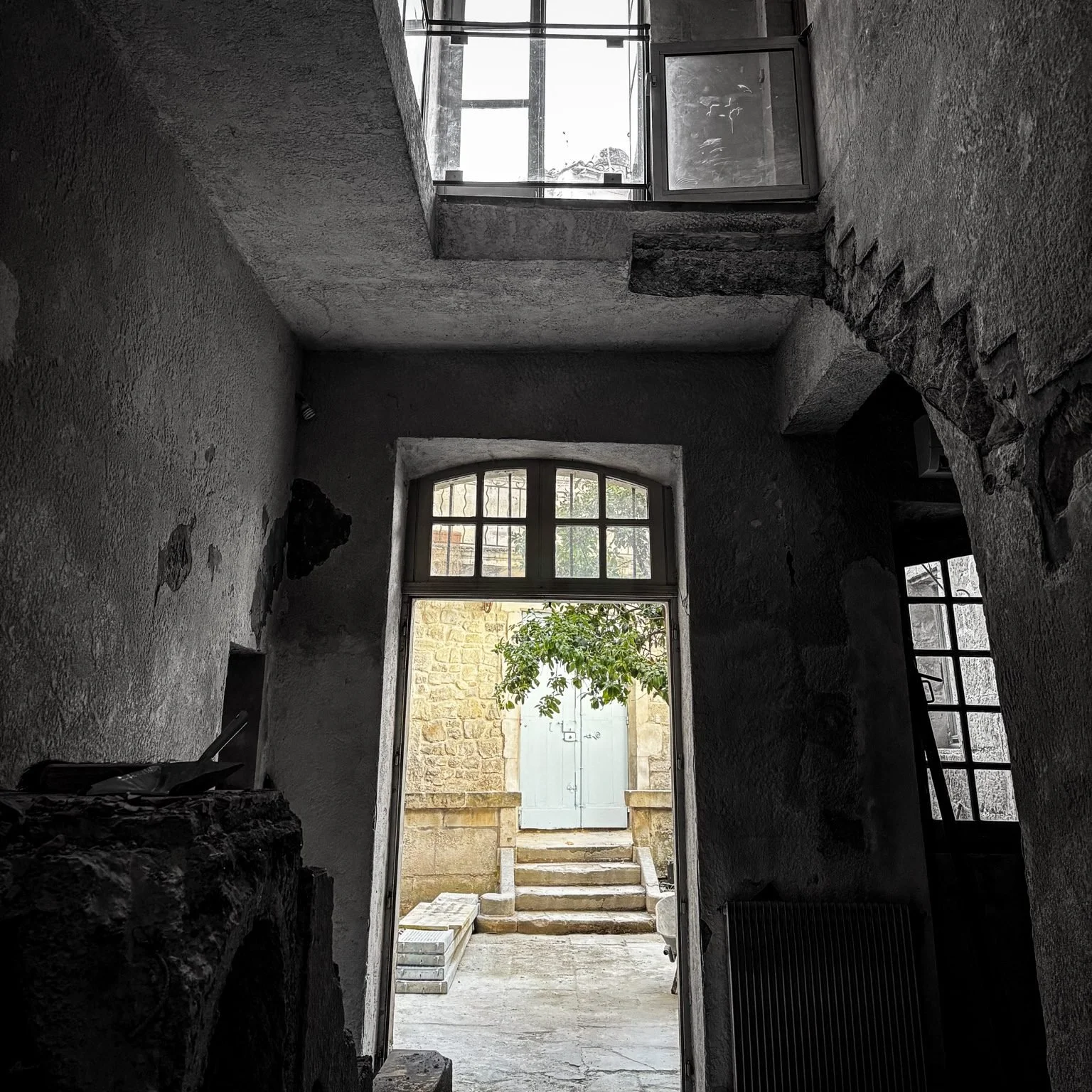
Another room in the gallery is turning into a masterpiece of light as well. It started as a wild idea, since it wasn't strictly a room, but a dull, dark corridor with a nondescript interior staircase built in the late 1970s to connect the floors without using the grand staircase. That brick-and-mortar structure cluttered the entrance and blocked the line of sight to the courtyard. I originally intended to remove it entirely to reclaim the original space and volume, when a crazy idea popped up: why rebuild a ceiling when you can use the stairwell opening to create a dramatic skylight?
And here we are, after a concerto of jackhammers: the room is slowly emerging from the dust. It isn't entirely finished yet, but the light effect is already spectacular.
Eternal Sunshine
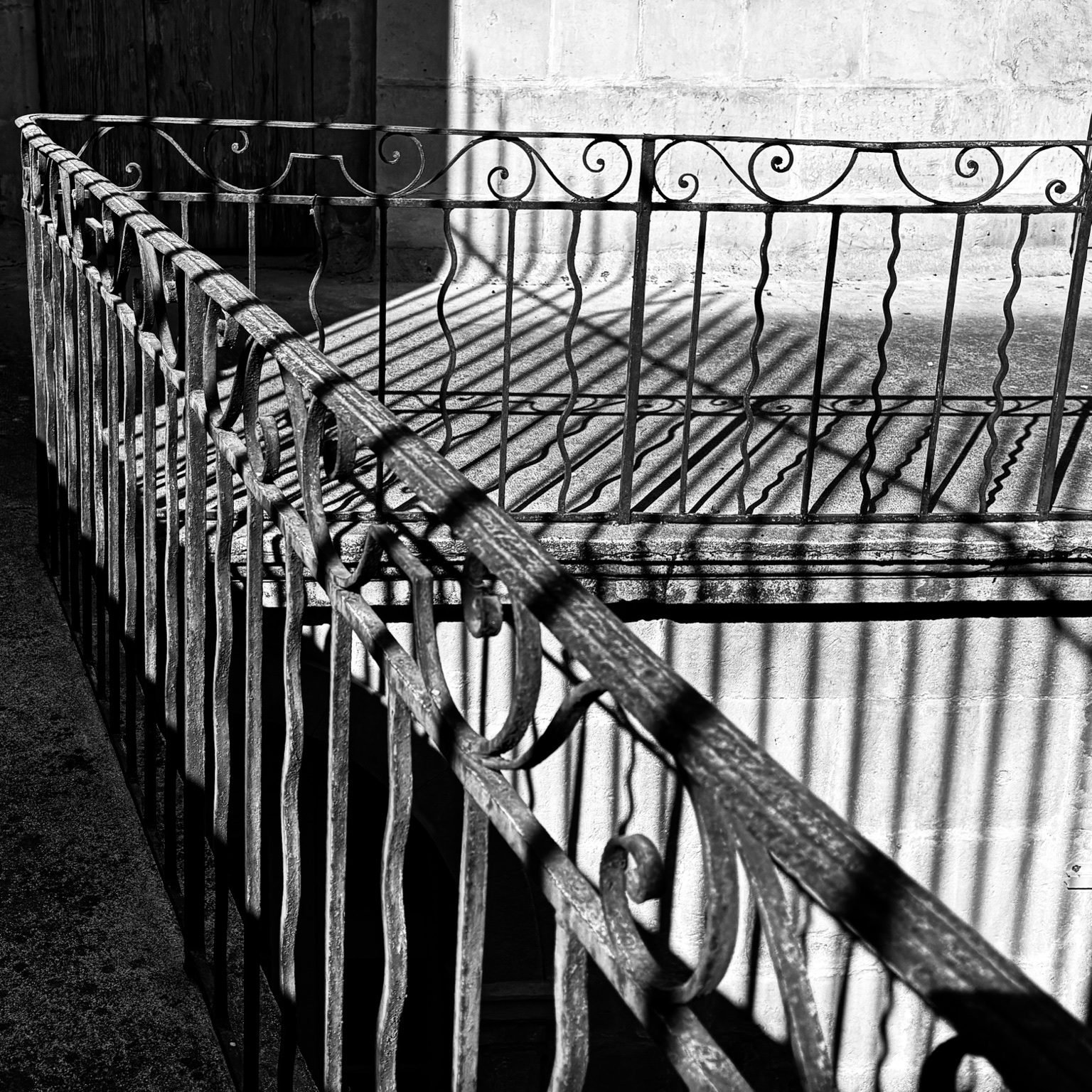
Another reason for me to track how sunlight moves across the building over time and seasons is the courtyard. It is an extraordinary feature of the property: the entire house is built around a central square open space, framed by two flights of hanging balconies and terraces. One side is covered, forming a long, shaded loggia with a Renaissance fountain. The heavy wooden backdoor sits in the middle of an elevated platform, spacious enough to host a small performance, a film screening, or an acoustic set.
How the sun moves through this space, both at floor level and across the balconies, will dictate the extent to which we can use these beautiful areas for vernissages, artist talks, additional exhibition displays, or simply to enjoy a good coffee and pastry while browsing through photobooks, surrounded by cascading plants and flowers.

