
smART Gallery #3: The Curation Assistant You Didn’t Know You Needed

There is a lot to say about AI when your world revolves around art, photography, launching a gallery, and engaging with online communities like Substack. While I am often the first to complain about the ethical concerns and blatant misuses of generative AI, I also have to acknowledge the immense help it provides behind the scenes.
The spark for this post came from a question by Helen in the Object Labels chat. She was looking for websites or apps to help track artists, museums, and upcoming exhibitions.
When someone mentioned the app See Saw, I chimed in with a slightly sideways take. Most specialized art-tracking apps focus strictly on a tiny selection of massive cultural hubs like New York, Paris, or Berlin. But the irony is, if you are visiting those mega-cities, finding out what’s happening in any given week is already super easy with a quick Google search. The real challenge lies in the messy middle: tailormade curation, other dynamic cities (not necessarily smaller ones), and mapping out an efficient itinerary.
That conversation made me realize I should share my own secret weapon: using AI to curate and plan my museum and gallery visits.
So far, I’ve used both ChatGPT and Gemini for this, though Claude or any other standard LLM would handle it beautifully. The trick is managing expectations. Don't assume the first response will be flawless. Like anything involving AI, it requires a feedback loop: you have to refine, cross-check, and review the data thoroughly. But if you play your cards right, you get great initial suggestions, a beautifully organized final output, and an incredible amount of time saved in between.
Case Study: Navigating Tokyo on a Tight Agenda
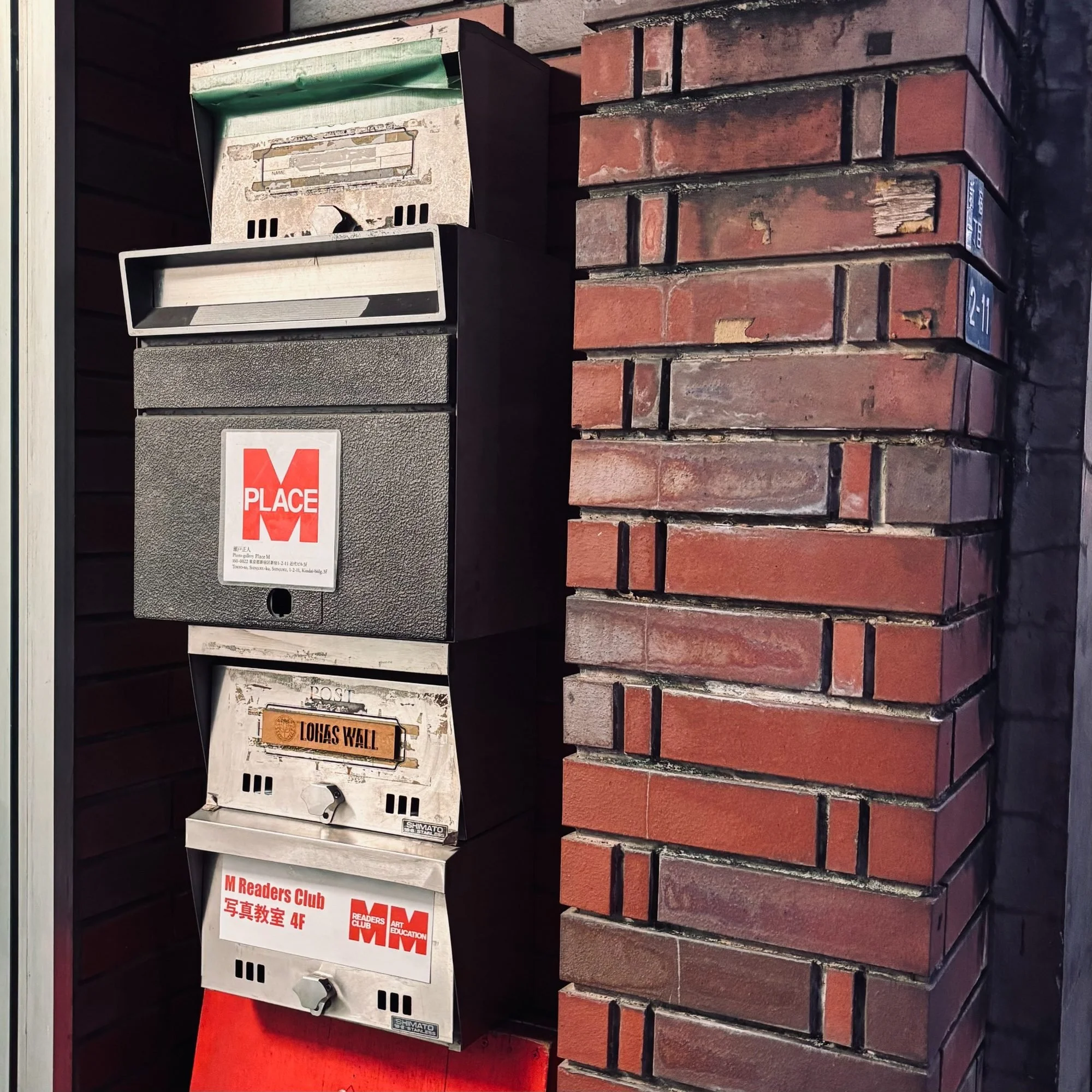
Place M mailboxes, Tokyo
The first time I used AI to build an artsy itinerary was for Tokyo. (Those who follow my Substack closely are already seeing a few posts pop up from my time there!)
I was embarking on a multi-week business trip through several Asian countries with a punishingly tight agenda. Tokyo was my first stop, and luckily enough, I had a window of free time over the weekend before flying to the next city. I decided to see if ChatGPT could act as my personal art concierge.
My first general prompt was as simple as this:
"Help me organize my personal time during my upcoming business trip to Asia. I will tell you where I am and when I’ll be available, as well as the galleries and other venues I already want to visit. I'd also like to get your recommendations for other spots, and have you design a smart itinerary in terms of objectives, transit, and logistics."
That initial prompt set the ground rules and helped me figure out the exact variables I needed to feed the AI for every subsequent city on my trip:
The City: Exact location.
Availability: Specific blocks of free hours (since most of my days were spoken for by business commitments).
Logistics: Where my hotel was located.
Priorities: Any "must-see" spaces or specific artistic focuses.
In return, I expected an optimized itinerary grouped by neighborhood, realistic transit times, buffer breaks, verified operating hours, booking requirements, and info on current exhibitions.
I gave ChatGPT my details: my hotel in Tokyo, my arrival and departure times, and my windows of non-work availability.
The Reality Check: Rejecting the First Draft
The AI’s initial response offered a general wishlist and a rough planning overview. It looked something like this:
Wednesday (Afternoon, near hotel): Shiseido Gallery, Canon Gallery Ginza. If not too tired: Artizon Museum. (All walking distance).
Friday (Late afternoon): Mori Art Museum, 21_21 Design Sight (30-minute subway ride + walking).
Saturday (Full day): TOP Museum, Daikanyama T-Site (Tsutaya Books), Nikon Salon Shinjuku, Tokyo Opera City Art Gallery.
Sunday (Morning): National Museum of Modern Art, Tokyo (MOMAT) (15-minute taxi ride).
And I rejected almost all of it.
It was way too generic. This is where using AI requires you to do a bit of your own homework. I had to step in and forcefully redirect ChatGPT to my specific focus: fine art photography. I also fed it a few underground starting points of my own, like Place M Gallery.
The Pivot: The Final Payload
Once I forced the AI past the mainstream tourist spots and anchored it in Tokyo’s specific indie photography scene, the wishlist transformed into something quite compelling.
The final, refined proposal was really good, ready to be copied/ pasted into my calendar. Now, as I am using other tools and I am more AI fluent, I get it entered directly into my calendar.
Wednesday (Afternoon – Arrival)
Place M Gallery
⏰ 12:00–19:00
📍 2 Chome-10-22 Shinjuku, Shinjuku City, Tokyo 160-0022
👉 Small associative/collective gallery. Plan for 30–40 mins.
Totem Pole Photo Gallery
⏰ 12:00–19:00
📍 3 Chome-13-3 Shinjuku, Shinjuku City, Tokyo 160-0022
👉 Artist-run collective gallery, often running multiple parallel exhibitions.
Friday (Late Afternoon)
Zen Foto Gallery
⏰ 12:00–19:00 (Note: Closes at 18:00 on Saturdays; double-check Friday hours).
📍 6-6-9 Roppongi, Minato-ku, Tokyo 106-0032
👉 Highly specialized gallery focusing on contemporary Asian photography.
Taka Ishii Gallery / Bookshop (Roppongi Hills)
⏰ 11:00–19:00
📍 Roppongi Hills, 6-5-24 Roppongi, Minato City, Tokyo 106-0032
👉 Cutting-edge photo bookstore featuring rare catalogs and limited editions.
Saturday (Full Day)
Tokyo Photographic Art Museum (TOP Museum)
⏰ 10:00–18:00
📍 Yebisu Garden Place, 1-13-3 Mita, Meguro City, Tokyo 153-0062
👉 A major photography institution. Plan for 1.5 to 2 hours.
NADiff A/P/A/R/T (Ebisu)
⏰ 12:00–20:00
📍 1-18-4 Ebisu, Shibuya City, Tokyo 150-0013
👉 Vibrant independent bookstore and contemporary art gallery space.
Photographers’ Gallery
⏰ 12:00–20:00
📍 2-16-11 Yotsuya, Shinjuku City, Tokyo 160-0004
👉 Photographer collective with excellent independent in-house publications.
Sunday (Morning)
Option 1: National Museum of Modern Art (MOMAT)
⏰ 10:00–17:00
📍 3-1 Kitanomaru-koen, Chiyoda City, Tokyo 102-8322
👉 A compact museum that frequently hosts excellent temporary photography exhibitions.
Option 2: POST (Daikanyama)
⏰ 12:00–20:00 (Note: Opens at noon; check timing relative to your flight).
📍 2-10-3 Ebisu Minami, Shibuya City, Tokyo 150-0022
👉 Ultra-specialized art bookshop featuring rare, curated photography editions.
The Golden Rule: Trust, but Verify
Because I treated the AI as a collaborative co-pilot rather than an infallible oracle, I had remarkably few bad surprises across all these different cities. The system proved to be quite reliable.
The only notable hiccup occurred during my stop in Singapore. The AI enthusiastically recommended a specific gallery that, as it turned out, had permanently closed its doors. But because I had already built a quick cross-check into my workflow, I caught the error online before wasting time on a long walk in the tropical humidity.
This brings us to the ultimate rule of using LLMs for travel curation: the 2-minute sanity check. Before you leave your hotel room, always double-check the gallery’s official website or Instagram page to confirm two things:
1. That they are still in business and open that day.
2. That the exhibition you want to see still matches your dates.
The Verdict
In the end, my tight schedule didn't allow me to hit every single spot on my Tokyo list. However, I managed to visit five of those venues, and every single one was absolutely spot on for what I wanted to experience. Thanks to this targeted routing, I had incredible, unexpected encounters with local photographers and gallery owners, all while enjoying a seamless stroll through the city without logistics fatigue.
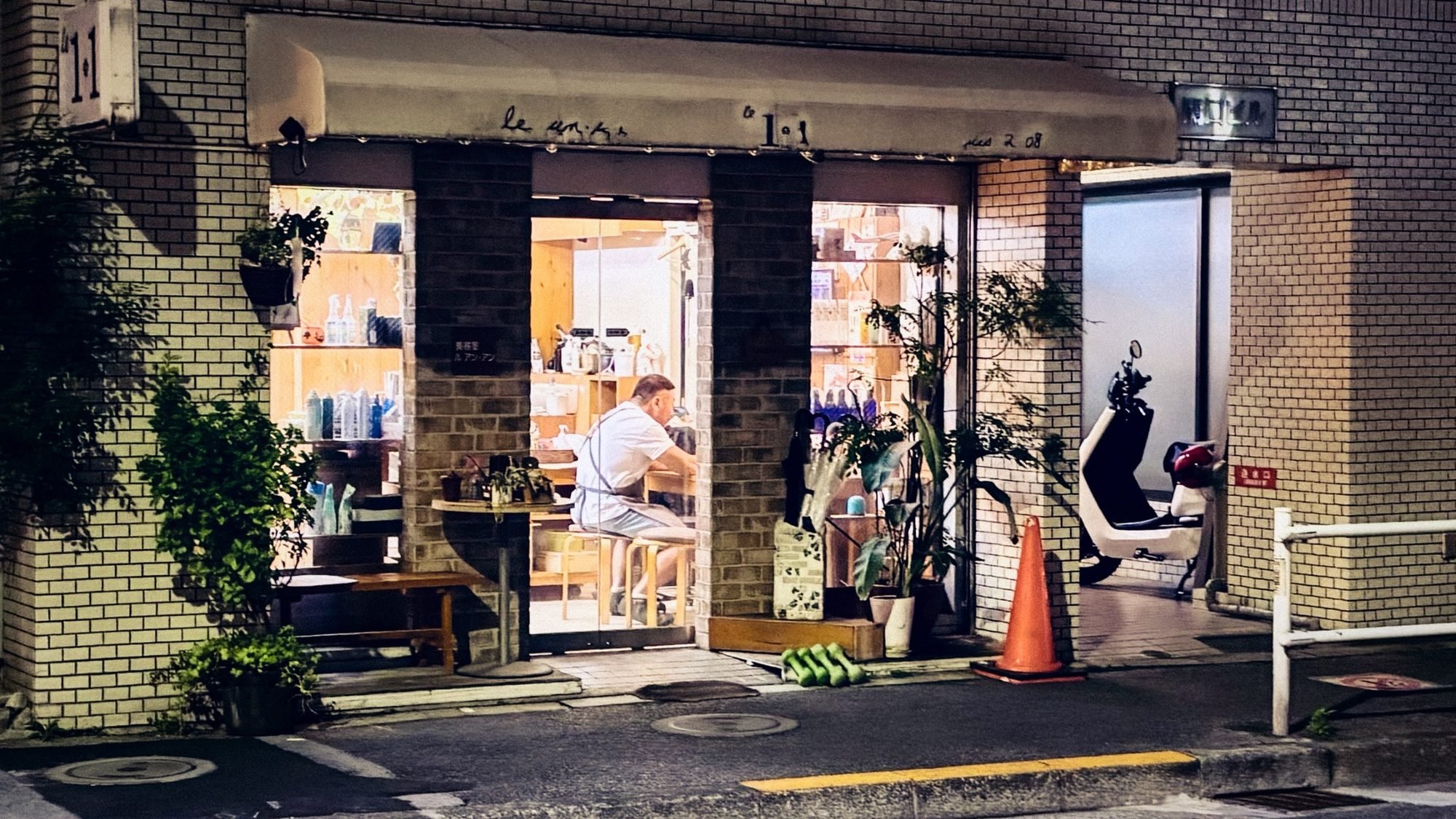
Evening stroll, Shinjuku
The entire planning process-from that generic first prompt to the final, actionable calendar export-took me a grand total of 30 to 45 minutes.
Since that Tokyo experiment, I have repeated, tweaked, and perfected this exact workflow for numerous other cities on my radar, including Manila, Singapore, Beijing, Taipei, and Berlin. If you treat the tool not as a magic button, but as a tireless, flexible research intern, it completely transforms how you explore the art world.

