
Corbels

We are finally getting closer to starting the renovation.
Everything takes time, a lot of time, but given the scale of the project, it feels inevitable.
So how will we approach it? There is no other way than step by step. A preliminary timeline is taking shape.
First quarter of 2026: North façade, rooftop, and interior renovation of the future gallery space on the ground floor.
The Architect of the Bâtiments de France, the city’s architect, and several stonemasons experienced in historic buildings have already visited the house and shared their recommendations. Listening to them, I am discovering a past far more complex and more enigmatic than I imagined.
In their report, a single line about the house’s location sends me straight into history: “the castle’s old bailey, located within the first enclosure.”
In medieval terms, this would have been a military area or set of barracks built against the castle walls.
The architecture seems to confirm it. In the east wing, large stone corbels remain, those massive projections that once supported the castle’s rampart, parapet, or even a section of the sentry walk.
Two of them inside the house, one in a bathroom and one in a corridor. And a remarkable third one outside, more visible, perfectly aligned with the others, and carried by a series of complex intersecting arches.
It reveals not an isolated relic, but an entire structural system as if the Middle Ages had left behind three silent witnesses.
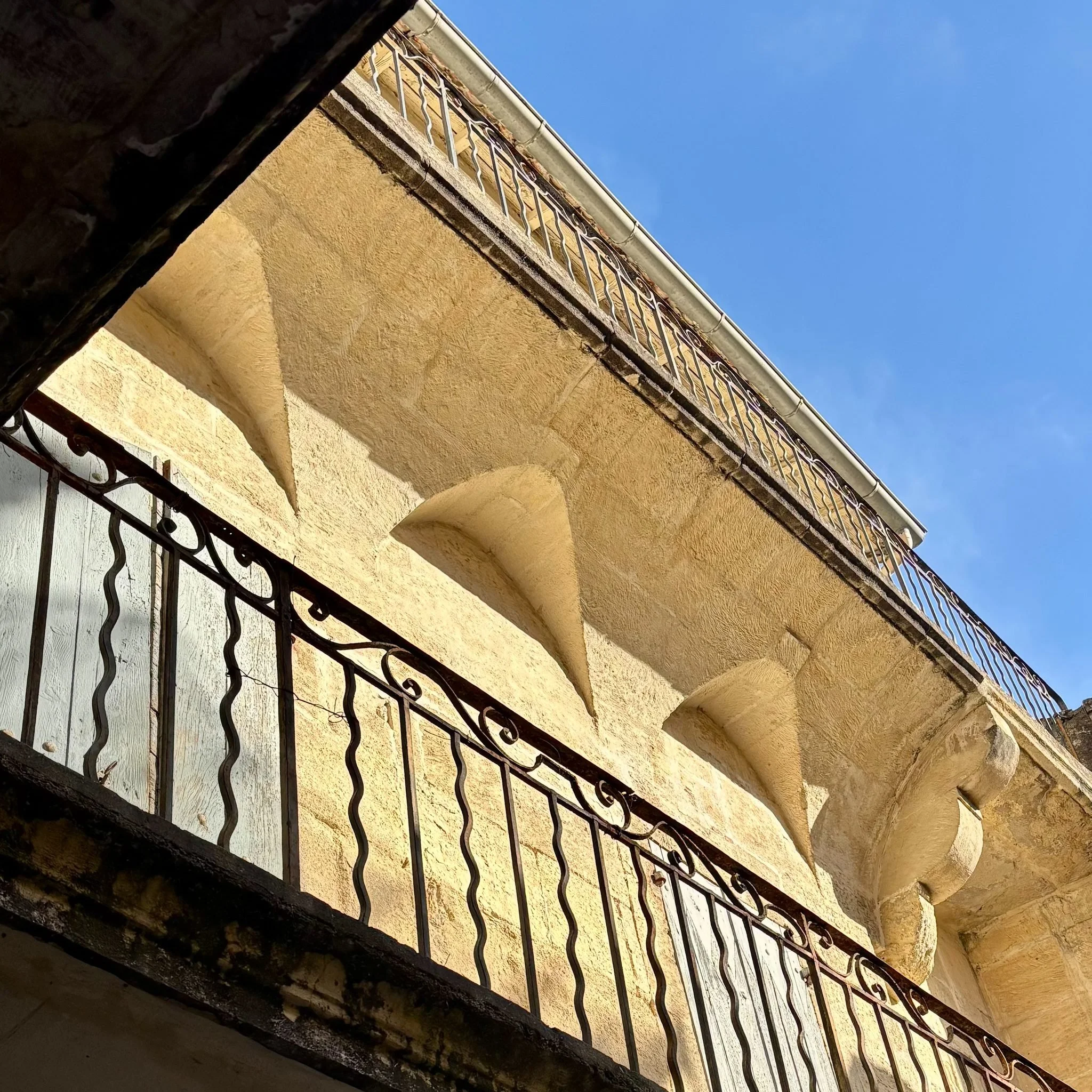
Medieval corbel
The first castle of Tarascon was built in the 13th century, long before what we see today after being rebuilt between 1400 and 1435.
Which raises a dizzying question. Could this part of the house have survived the siege of Tarascon led by Du Guesclin in 1368?
I have not thought about Du Guesclin since primary school, when we were still taught the Hundred Years’ War through stories that were more memorable than accurate.
I remember one in particular. He was said to have rushed out of his tent fully naked, sword in hand, after being startled awake by an enemy attack.
For a class of seven-year-olds, it was of course hilarious.
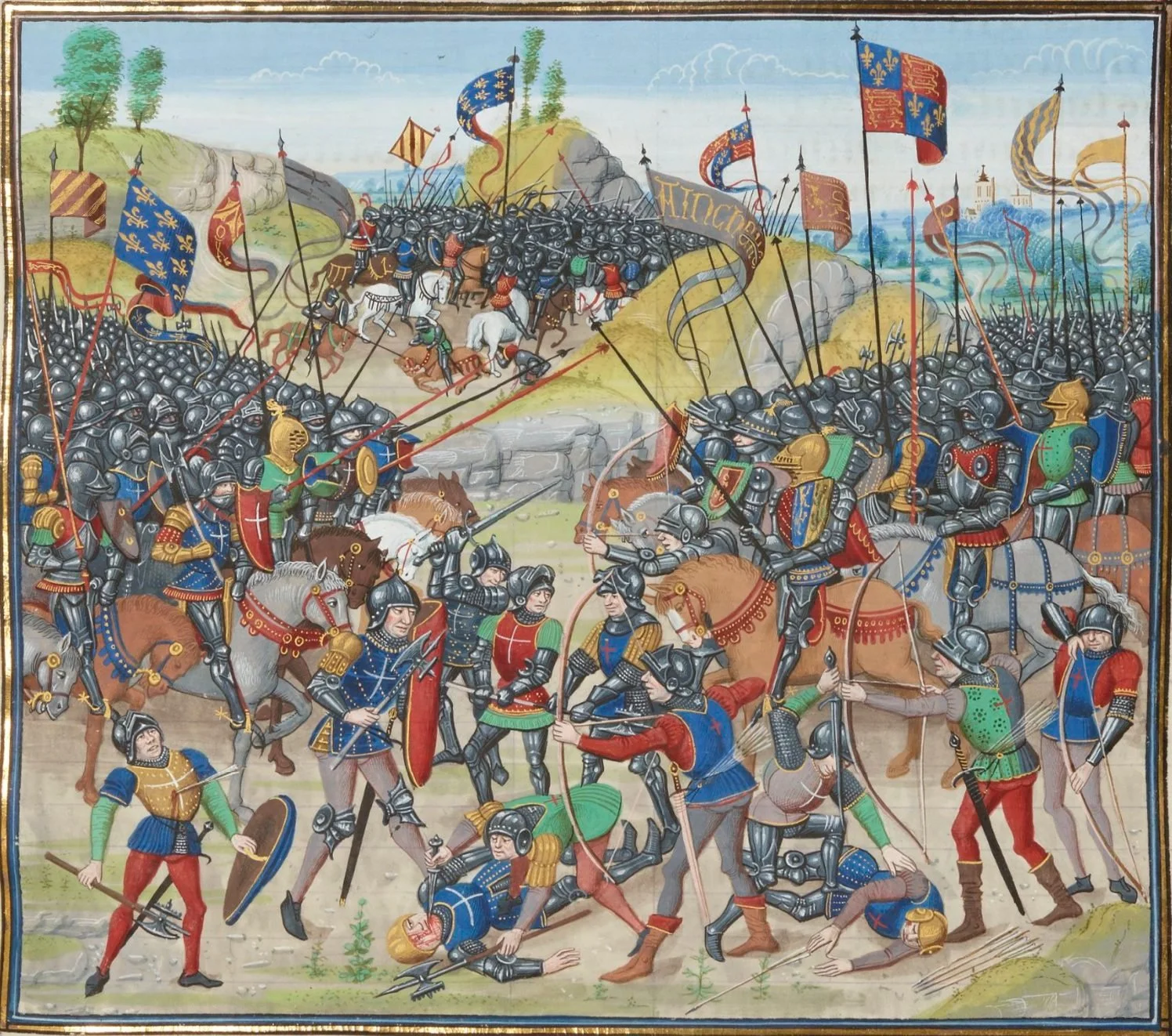
The Battle of Auray, from the Chronicle of Bertrand du Guesclin by Cuvelier
And here he is again today, resurfacing in an architect’s report. The past sometimes returns in the most unexpected ways.

