
Albert Kahn Museum

A simple bike ride on a sunny autumn afternoon turned into an unexpected lesson in exhibition design, mediation, and the way images can shape an experience.
At the Albert Kahn Museum, what struck me most was not only the photographs themselves, fascinating in their own right, but the way they were brought to life through space. Here, scenography is not decoration: it is a language. It redirects the gaze, creates rhythm, and sets an emotion.
Three very different display approaches resonated deeply with my own reflections for Galerie Bokeh.
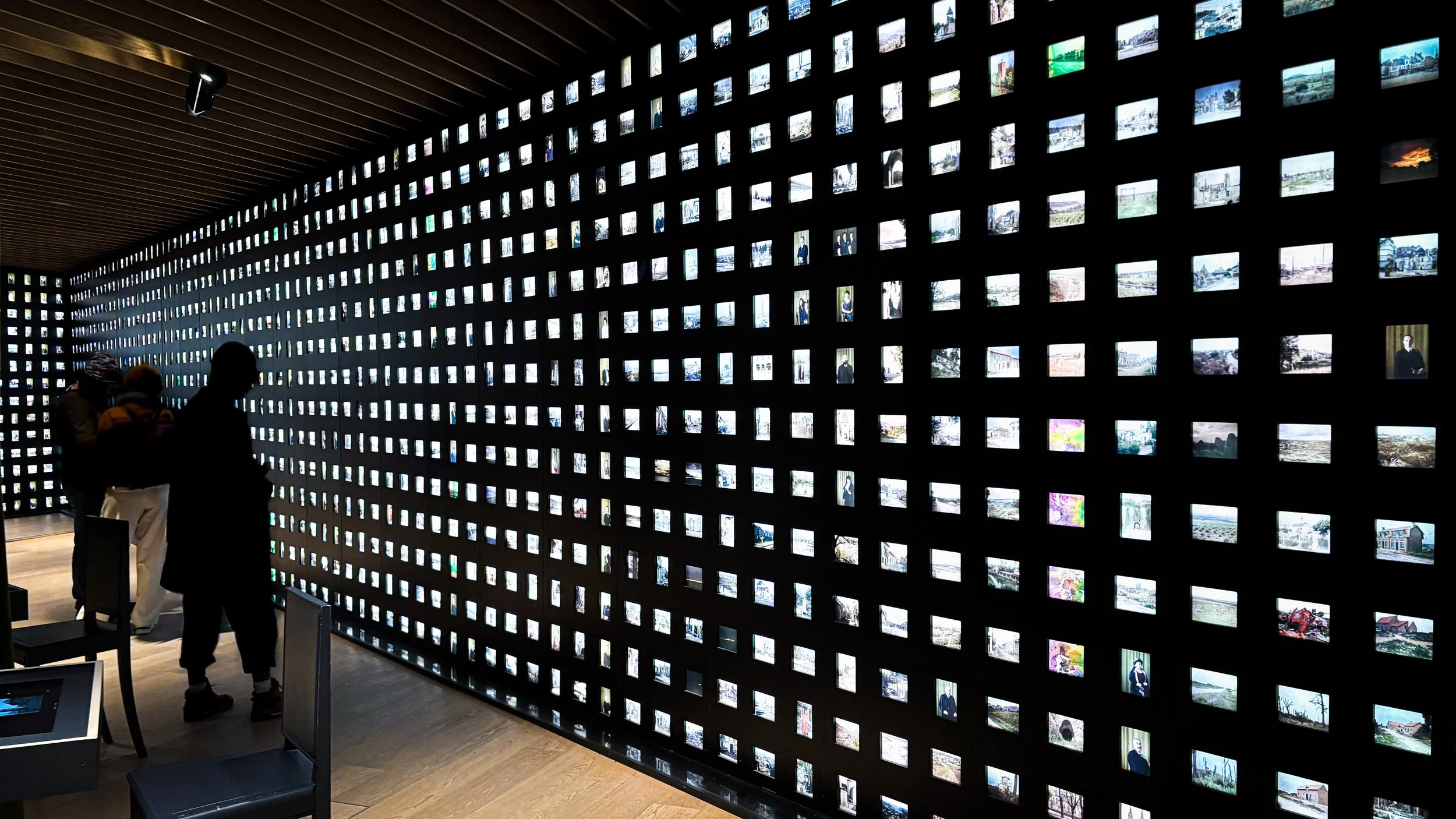
Image bricks
A long backlit wall composed of hundreds of small photos, like a landscape of memories turned into architecture. Such device, in a more modest form, offers enormous potential: a reusable, modular luminous surface capable of carrying different narratives.Light does not “decorate”: it activates memory.
Two photographic archives came immediately to mind:
the photographs taken by my uncle between 1950 and 1980 during his travels, especially in the Middle East;
the historical corpus from Tarascon, which would benefit from an immersive, living presentation.
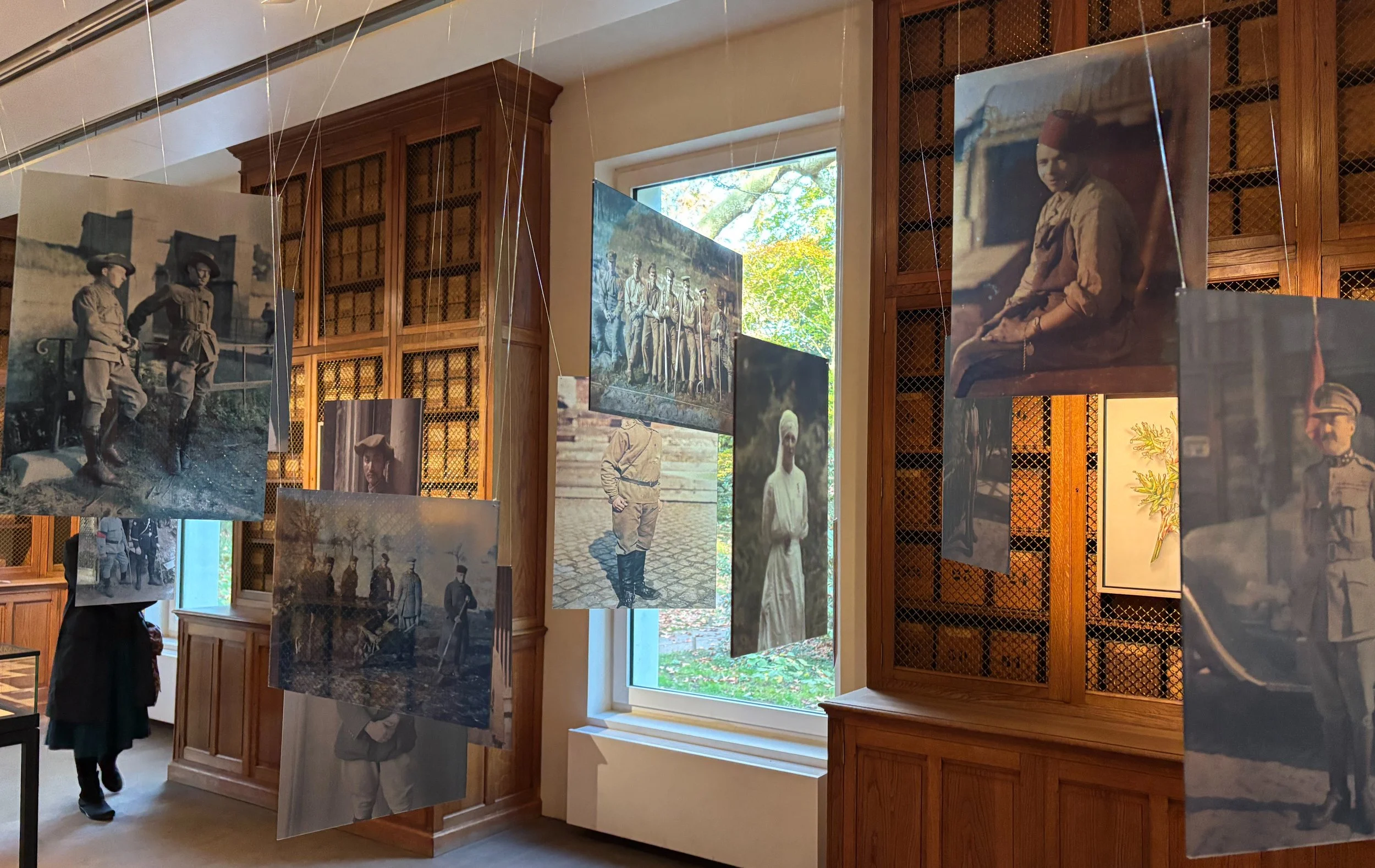
The image mobile
In another pavilion, a simple installation: glass plates suspended in space. A mobile, like a movable, adaptable device that would fit perfectly under the high ceilings of Tarascon.
You walk among the images, see them through transparency and superposition. They enter into a silent conversation.
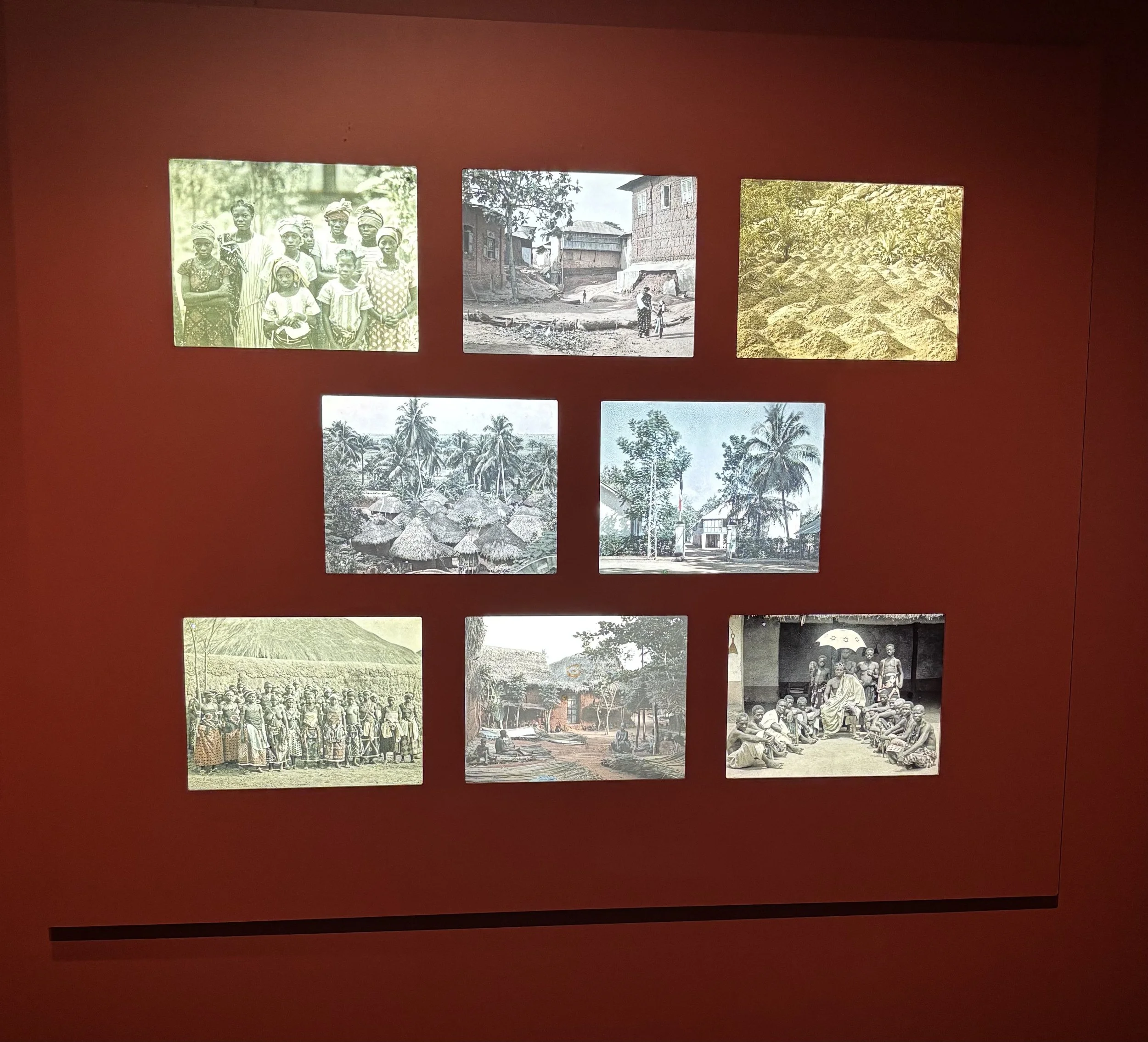
Simple and intense
I was also impressed by the sobriety of certain displays: a deep black background acting as a focused stage, or a vibrant red wall with backlit images creating a theatrical presence.
Nothing ostentatious. Just the right intensity to reveal the image.
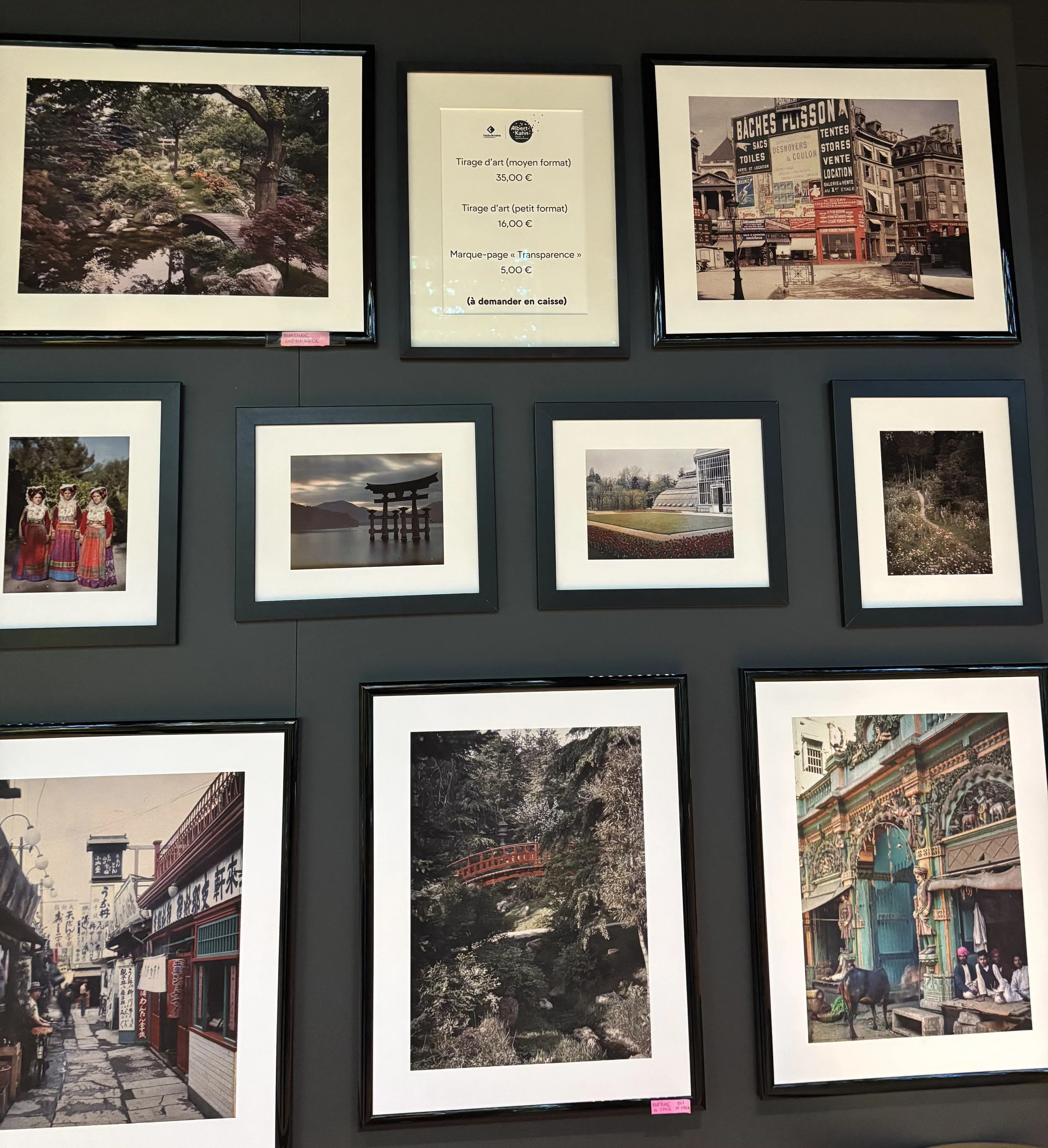
The museum shop
Not because of the merchandise, but because it raised an important question: how can visitors take an image home ?
The art prints, offered at accessible prices and on high-quality materials, created a bridge between a visit at the museum and everyday life .
This echoes one of the essential questions I keep returning to:
How can we offer multiple entry points into art, without compromising on quality?
There is no single answer. But the idea of a coherent range of formats and price feels increasingly important.
This museum offered much more than a visit. It became a toolbox, a ground for experimentation, and a genuine source of inspiration for imagining what Galerie Bokeh might become.
